EWB-USA Philadelphia | Philippines Project

EWB-USA Philadelphia | Philippines Project
Engineers Without Borders USA - Philadelphia Professional Chapter | Travel Blog

Wednesday, September 4, 2013

Field Report Summary - May 2013 Trip

Project member (and professional hydrogeologist) Bob DiFilippo traveled to Apatut on behalf of EWB-Philly for additional assessment and follow-up May 21-26, 2013. The May 2013 trip objectives were based around assessment of the work required to complete well development, meetings with the Balaoan Municipality to begin discussion and negotiation of community water rates, meetings with the Apatut community to discuss and seek approval for the municipal tie in as a viable water source alternative, and investigation of any on the ground logistics with the community that would be required in tying into the municipal water line.

The following is a summary of the May 2013 trip as culled from the travel team field report:


  • 21 May 2013: Arrival in Manila. Met local NGO contact. Visited a water quality testing laboratory near Manila. Discussed sampling protocol and picked up sampling materials. Visited the Philippine Local Water Utilities Administration (LWUA) near Manila to discuss and review EWB-USA Philadelphia’s rate proposal on behalf of the Apatut community. Took bus to Apatut same-day.
  • 22 May 2013: 1st day in Apatut. Met local village volunteers who assisted in fabrication of slug and bailer assembly for well development. Re-assessed EWB drilled deep well for depth to water and total depth. Began slug insertion and bailer recovery testing. 
  • 23 May 2013: Completed bailer well recovery testing. Collected water quality samples at the EWB drilled deep well, piggery shallow well and guest house well. Took bus to Manila at midnight. 
  • 24 May 2013: 6am water quality samples on ice at local water quality laboratory in Manila.

Trip Description (as submitted to EWB-USA HQ)

During the May 2013 trip, EWB-USA Philadelphia presented a municipal tie-in proposal to the local water utilities administration (LWUA) nearest to Apatut. Additional assessment was performed related to the EWB-Philly's drilled deep well (from Spring 2012) with conventional well development techniques including; slug insertion and bailer recovery testing. The intent was to determine a preliminary recovery rate from the borehole. Arrangements were made with a local laboratory for chemical water quality analysis targeting volatile organics, semivolatile organics, pesticides, and herbicides. We also began discussions with the local community regarding municipal water line tie-in as a potential water source solution. As an interim measure, our team is investigating the feasibility of point of use household chlorine treatment for improved household water quality in the short term.

Completion of the assessment trip has enabled our team to further assess the viability of the drilled well or municipal tie-in as a water source. Water quality results are inconclusive at the moment, as it appears that the integrity of the sample chain of custody has been broken. The next steps will be to confirm the integrity or lack of integrity of the sample chain of custody, evaluate the different water source options; engage the community in a decision-making process to determine the best and/or preferred water source alternative for their needs and wants, discuss available short term measures to improve the community’s water quality and plan next steps with the community’s input. The EWB-Philly project team plans to investigate and assess the work required to complete well development either with local labor and oversight from our traveling members, or a local well drilling contractor.

View some images from the trip at the Well Rehabilitation Video/Images Spring 2013 blog entry below!


Friday, August 23, 2013

Well Rehabilitation Video/Images Spring 2013


Well Development activities 22-23 May 2013 

Well Development 
Village Support
Tri-Pod Set up
Study Area in background near tree with orange bloom, view from main road
walking from the guest house.
Slug used for surging well bore
Bailer used for manual water recovery

Friday, December 28, 2012

Cultural Experience: The Food in Apatut and the Manila Fish Market


The food in the Philippines was FANTASTIC - abundant, fresh, and lovingly prepared.  In Apatut, there were new and interesting fruits and vegetables to try and tons of rice and fresh, locally caught fish.  Here are some photos of some of the fun and most interesting things we ate and one of my favorite places to visit, the Manila Fish Market.

Halo-halo (aka mix-mix)
A rice pudding dish

Fruit market


Gloria's Pancit - My favorite Filipino dish

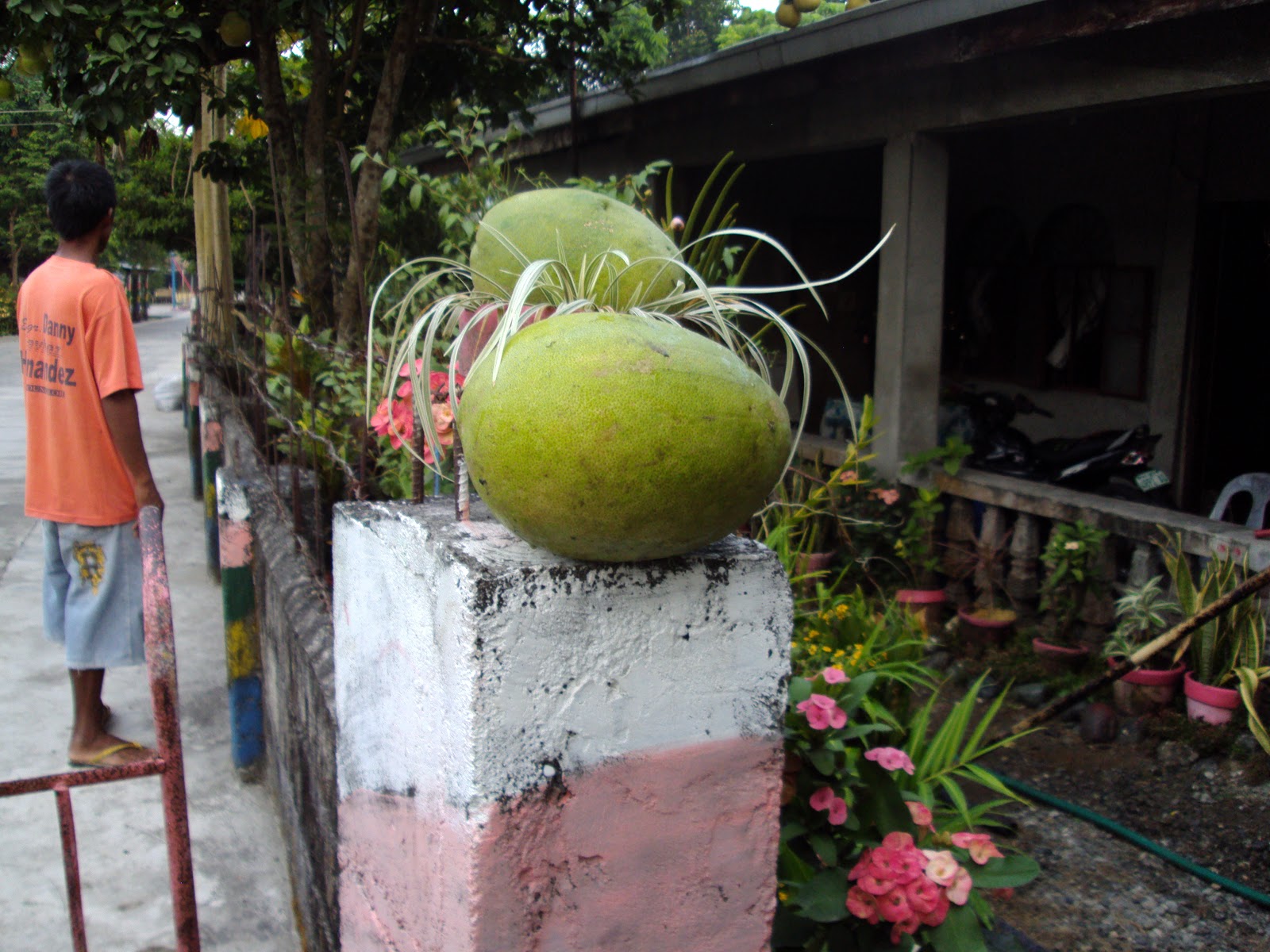
Grapefruit

World's longest string beans

Where the magic happens - outdoor kitchenette

Fresh yellowfin tuna on our last night in Apatut

One of my favorite places to visit is the fish market in Manila - there are three locations, all similar.  Right next to the market are a bunch of hole-in-the-wall type eateries where you can bring newly bought fish or have them buy it for you and everything is made exactly to order.  I just love this idea and wish we had a place like this in Philadelphia!

Outside the market


Scallops in cheese and a buttery sauce

Shrimp in butter garlic sauce

Sweet and sour grouper

Crab
Happy eaters!

Everything, both in Apatut and Manila, was delicious, and definitely one of the highlights of the trip!

Team 2 arrives in Apatut


We arrived in Apatut at about 5 pm on a Monday night, after almost 36 hours of travel to get there (we had a brief respite in Manila between the 3-leg 24-hour flight and the 9 hour bus ride from Manila to Apatut).  Upon arrival, we learned just how busy Team 1 had been!  After a brief rundown of what had been completed to-date, we opted to split the team into two parts, with Steve, Anne-Marie, and Tiffini continuing with the community survey and Bob and Stephanie working on investigating potential water sources, including meeting well drillers, the local Balaoan Water District, and investigating wells in the community and the EWB drilled well.  

As previously mentioned, a water column was identified in the EWB well and was actually measured to be about 120 feet long (from approximately 10 to 50 meters below ground surface).  A recovery test was completed for the EWB-drilled well following the removal of approximately 6 feet of water column (removal was limited due to available equipment).  The well exhibited 'ideal', although slow, recharge, suggesting the potential for a sustainable yield for water supply.  Upon removal of piping, it was observed that the piping was covered with bentonite (a drilling material), suggesting that the well had not been properly developed.  

Villagers making pumping apparatus
The team collectively visited a neighboring spring site.  The site is owned and operated by the Balaoan Water District and, therefore, cannot be used as a water source for Apatut.  It was, however, a good opportunity to see and document the water source, and the visit cleared up some confusion about the spring based on previous trips.  


Spring Site


After Team 1 left, Team 2 completed additional sampling of the original locations for physical/chemical parameters and sampled the EWB well and all three wells at the school for biological, chemical, and physical parameters.  The results of the sampling confirm biological contamination and also identified some metals impacts above Philippine National Standards; these will need to be considered during the design phase.  As a result of interviewing several farmers in the community, EWB confirmed the use of herbicides and pesticides containing volatile and semi-volatile organics; this confirms the need for sampling of these parameters and EWB has been working to contract a lab with these testing capabilities in-country (only one lab has been identified to date).

Tiffini with sampling apparatus for the EWB well


Post-community meeting with volunteers


We also developed a detailed map of the school, canvassed materials suppliers in San Fernando, completed a chlorine treatment test, completed the community survey, and held community meetings.  


Tiffini scoping out a residential well
When all was said and done, EWB canvassed all occupied households in the community (over 175!) and was able to create a detailed map of the community identifying all relevant features including houses, latrines, wells, garbage pits, agricultural fields, roadways, etc.  EWB is working with a local college to have these locations surveyed and a to-scale map developed.  This was a huge undertaking and will be pivotal in our ongoing design efforts. 

Monday, November 12, 2012

Return to Apatut: Community and Well Assessment, Oct 27-Nov 5


The EWB-MAP team scheduled a trip to Apatut for additional assessments and investigations October 27-November 16; the trip was broken down in two phases, with four members arriving in Apatut October 29 (Walt Walker, Bob DiFilippo, Steve Kim, Anne-Marie Biser) and two additional persons arriving on November 5.  We arrived during the week of an important Filipino holiday (All Saints), which is something to take into account for future travel plans (encountering difficulty in meeting with certain persons or entities due to holiday closures)

Upon arrival to Apatut, we walked the community to get a visual feel of the area and some items which were previously GPS’d  earlier in the year by the team of Shelley/Ed. Upon general visual observation, It was also noted that most of the shallow wells in the community were sealed (hand pump), with the exception of those used for irrigation.

We viewed the proposed deep well site, observed some water in the well, which we eventually measured to be approximately 75 feet of water column.  Bob contacted a drilling contractor in Taguig City to visit and inspect the well as a viability of a community water source, or whether additional drilling would result in further attainment of water.

It was observed that the Irrigation wells (open holes, but pumped using generator) delivered a full consistent flow, estimated to be 30gpm; on other side of a street dividing the field a well/hole was hand drilled to a depth of approximately 40 feet, from which a similar flow of was noted.  One of the irrigation wells was on land donated to the chapter/community, although the distance from the main road and likelihood of nitrate and pesticide contamination raised some concerns. 

To further investigate the probably of using the shallow public wells a source, we sampled six (wells): one each from Robert Osoteo and a two neighboring houses (as a baseline) and three wells used for irrigation.  The samples were dropped off at the Department Of Science and Technology (DOST) in San Fernando on the morning we sampled (November 5). DOST is limited to testing of fecal coliform and was unable to test for other important parameters such as pesticides, turbidity, and TDS among others.   We are working to find the proper authorities to test for those items.

After walking through the community, we believed there are many more wells than what was shown on the Google Earth map. We concluded that an inventory/survey of the total number of houses and wells may be needed to get a better grasp on feasibility of alternative water distribution design options.  To use time efficiently in reaching out to all seven sectors of the community, the four of us separated into two teams (Walt/Steve, Bob/Anne) bringing along an interpreter for each team. The community survey focused on the source(s) of water for each household, and disposal locations of waste and grey water (important for examining potential groundwater contamination).


The second team of Stephanie Cook and Tiffini Smith arrived in Apatut on November 5, in hopes of addressing other issues such: tapping into the Province’s water main along the highway (household costs is a concern); status of the Water Cooperative (formed in 2010, is it still active?); investigation of the spring (in our survey, many households in Sector 4 admitted use for non-potable applications); additional well sampling for specific water quality parameters; and evaluation of a separate system for the elementary school.